Embedded Development Board Learning
Starter Kit for ESP32-P4
Date: enero 14, 2026
Author: DBL
Categories: Uncategorized Tags:
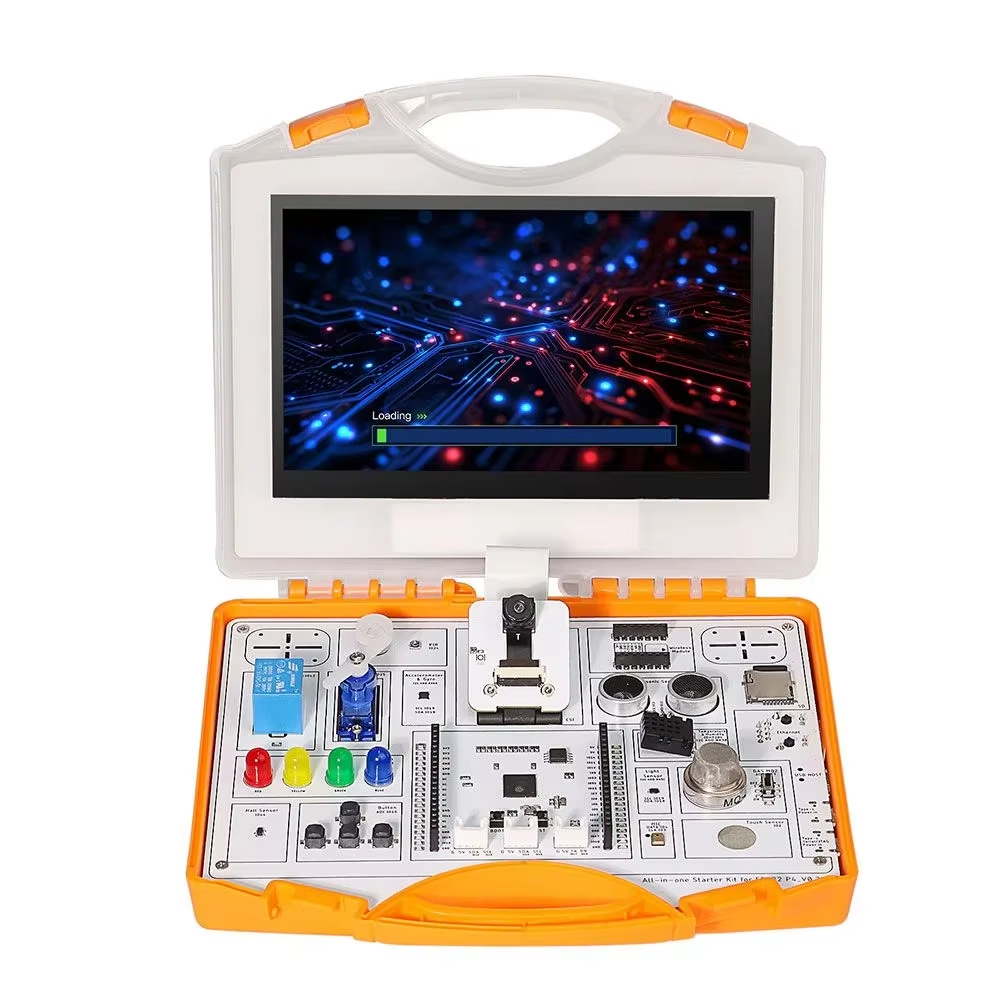
Espressif’s ESP32 series has long been a darling for developers, powering countless IoT and embedded projects. With the advent of the ESP32-P4, Espressif is stepping firmly into the realm of powerful edge processing, specifically targeting advanced ESP32-P4 AI applications. This microcontroller unit (MCU) boasts a significantly more potent CPU and, critically, an integrated Neural Processing Unit (NPU), making it a formidable choice for applications requiring local machine learning inference, complex HMI, and rich multimedia processing without relying heavily on cloud resources. For those eager to dive into this new era of intelligent edge devices, a well-designed starter kit is the perfect entry point. Let’s take a look at what to expect from an ESP32-P4 development experience.
Specifications
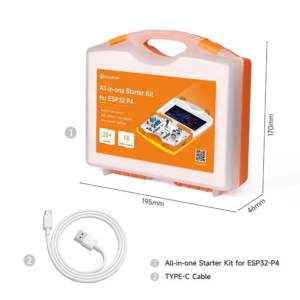
The core of any ESP32-P4 starter kit is, of course, the ESP32-P4 SoC itself. This beast of a chip features a dual-core Xtensa LX7 CPU running up to 400 MHz, coupled with a dedicated NPU for accelerating AI/ML tasks. Key specifications often highlighted include:
- CPU: Dual-core Xtensa LX7 (up to 400 MHz)
- NPU: Dedicated Neural Processing Unit for AI inference acceleration
- Memory: Up to 32MB of on-chip RAM, including 8MB of high-performance SRAM for AI models and data
- Graphics: Integrated 2D graphics accelerator, MIPI-DSI/CSI interfaces for displays and cameras
- Peripherals: Rich set of I/O, including USB OTG, SD/eMMC, SPI, I2C, UART, I2S, CAN, Ethernet MAC
- Security: Hardware security features, secure boot, flash encryption
A typical starter kit board will build upon these capabilities, usually featuring:
- The ESP32-P4 module (e.g., an ESP32-P4-MINI-1 module)
- USB-C port for power and programming/debugging
- GPIO pin headers for easy access to peripherals
- On-board buttons (reset, boot) and LEDs
- Optional: MicroSD card slot, camera connector (CSI), display connector (DSI), Ethernet port
- Power regulation circuitry
These features collectively make the ESP32-P4 starter kit an ideal platform for developing sophisticated edge AI solutions.
Connectivity
While the ESP32-P4 itself is designed for powerful local processing and lacks integrated Wi-Fi/Bluetooth, starter kits often address connectivity in several ways to support diverse ESP32-P4 AI applications:
- Wired Connectivity: The ESP32-P4 excels here, offering a comprehensive array of wired interfaces. You’ll find plenty of GPIOs, SPI, I2C, UART, and I2S for connecting a vast range of sensors, actuators, and other peripherals. Crucially, the USB OTG port enables host or device modes, and the Ethernet MAC provides robust wired network connectivity.
- Camera & Display Interfaces: With MIPI-DSI and MIPI-CSI interfaces, the ESP32-P4 is primed for direct connection to high-resolution cameras and displays, a common requirement for many vision-based AI projects.
- External Wireless (Optional): Many starter kits might include a separate module or footprint for a companion Wi-Fi/Bluetooth chip (like an ESP32-C6 or ESP32-S3) if wireless network connectivity or Bluetooth communication is required for the application. Alternatively, developers can add external Wi-Fi/BT modules via SPI or UART.
This focus on robust wired connectivity and high-speed multimedia interfaces makes the ESP32-P4 highly suitable for applications where processing happens locally, and network access is either wired or handled by an adjacent, simpler wireless chip.
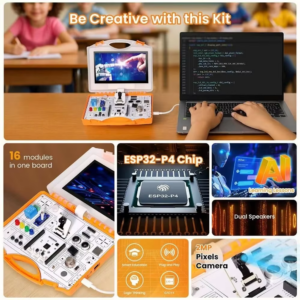
Unlocking ESP32-P4 AI Applications: Use Cases
The ESP32-P4’s combination of a powerful CPU and dedicated NPU opens up a new realm of possibilities for ESP32-P4 AI applications at the edge. Here are some compelling use cases that a starter kit can help you explore:
- Human-Machine Interface (HMI): Developing advanced smart panels with rich graphics, touch capabilities, and even voice command processing, all locally on the device. Think smart home control panels, industrial interfaces, or interactive kiosks.
- Machine Vision & Object Recognition: Running lightweight object detection, facial recognition, or gesture recognition models directly on images captured from an attached camera. Ideal for security cameras, smart appliances, or industrial inspection systems that need real-time, local inference.
- Audio Processing & Voice AI: Implementing complex audio analysis, keyword spotting, and even basic speech recognition without requiring constant cloud communication, leading to faster response times and enhanced privacy.
- Industrial Automation & Robotics: Enabling intelligent control systems for robotic arms, automated vehicles, or smart factory equipment that can make real-time decisions based on sensor data and AI models.
- Smart Home Devices: Creating more intelligent and responsive smart appliances, security systems, or environmental monitors that perform AI inference on-device for faster and more private operations.
With its robust processing power and dedicated AI acceleration, the ESP32-P4 is set to become a go-to chip for developers building intelligent, standalone embedded systems.
Where to Buy
As the ESP32-P4 is a relatively new and high-performance chip, starter kits are primarily available from official Espressif distributors and specialized electronics retailers. For developers looking to experiment or prototype, online marketplaces can be a good starting point to find development boards and associated modules.
You can often find ESP32-P4 development boards and starter kits by searching on platforms like:
AliExpress: Search for «ESP32-P4 starter kit» on AliExpress
Be sure to check the specific components included in any kit to ensure it meets your project’s needs, especially regarding display, camera, and specific peripheral breakout options.
Deja una respuesta