Embedded Development Board Learning
ESP32-C6-Touch-AMOLED: A Feature-Rich Development Board
Date: enero 5, 2026
Author: DBL
Categories: Development Boards Tags: waveshare
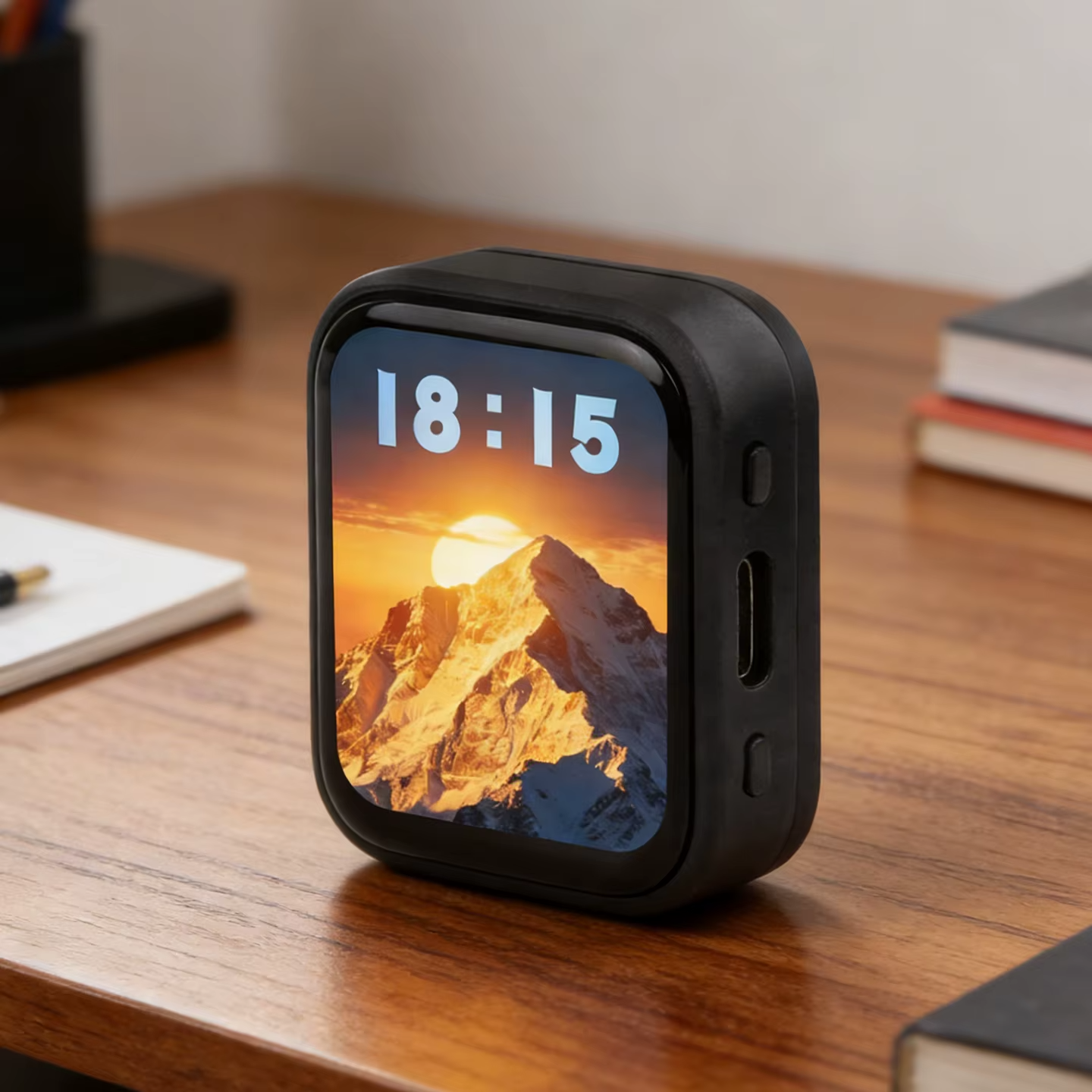
Espressif’s ESP32-C6 SoC has been making waves in the IoT space with its unique combination of Wi-Fi 6, Bluetooth 5.0 LE, Zigbee, and Thread protocol support. The ESP32-C6 development board we’re examining today, the ESP32-C6-Touch-AMOLED, takes this versatile chip and integrates it with a vibrant AMOLED display and capacitive touch, offering a compelling platform for a wide range of embedded applications requiring a user interface. This board appears designed to accelerate prototyping for smart home control panels, industrial HMI, portable dashboards, and other GUI-intensive IoT devices, leveraging the ESP32-C6’s robust connectivity and RISC-V architecture.
Table of Contents
Specifications of the ESP32-C6-Touch-AMOLED Development Board
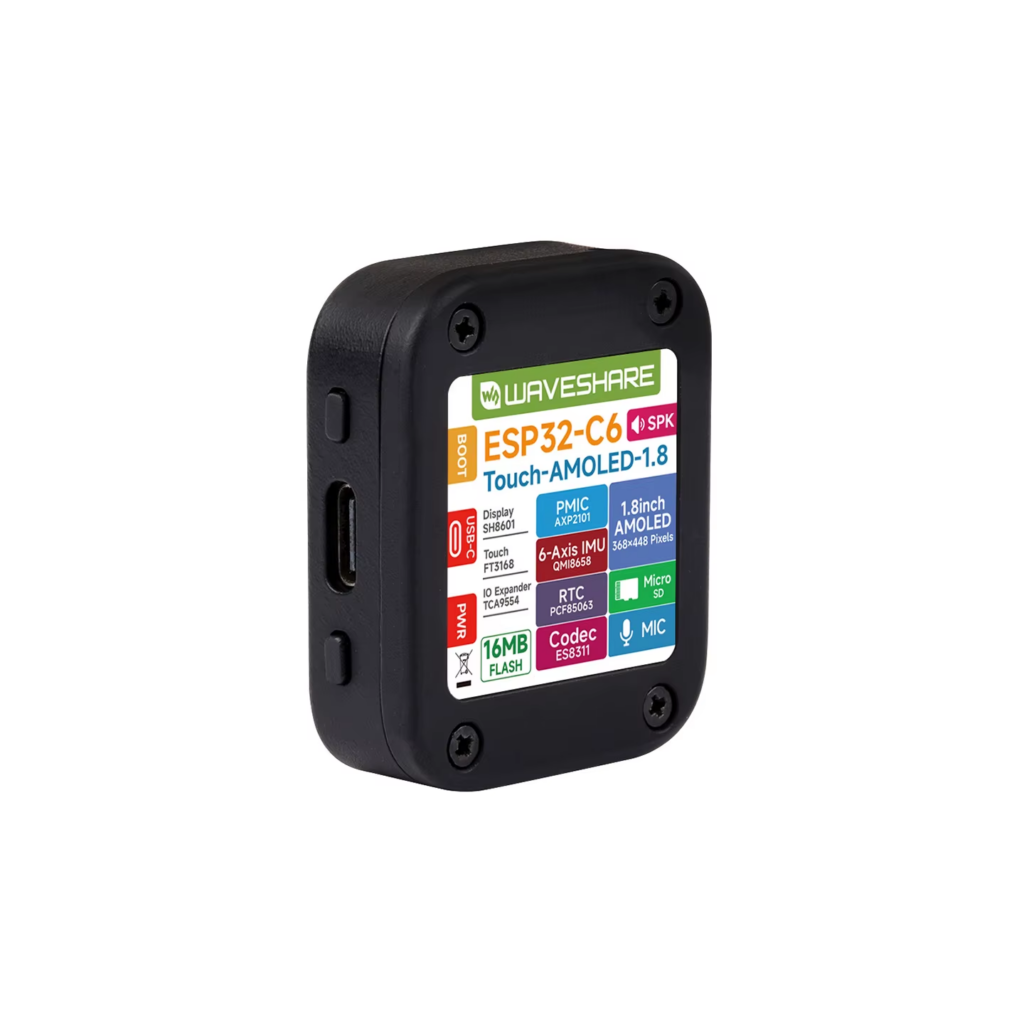
The core of this powerful development board is, of course, the Espressif ESP32-C6 SoC, a low-power, highly integrated solution. Here’s a breakdown of what you can typically expect from such a board:
- Wireless SoC: Espressif ESP32-C6-MINI-1 or similar module.
- CPU: Dual-core RISC-V processor (one high-performance, one low-power).
- Wireless: 2.4 GHz Wi-Fi 6 (802.11ax), Bluetooth 5.0 LE, Zigbee 3.0, Thread 1.3.
- Memory: Integrated 320 KB ROM, 512 KB SRAM.
- External Memory: Typically features 8MB or 16MB of SPI flash for firmware and data storage, and often 8MB of PSRAM for larger buffers and GUI assets.
- Display: An AMOLED panel, commonly ranging from 2.8-inch to 3.5-inch diagonal, with resolutions such as 320×240 or 480×320 pixels. AMOLED technology provides excellent contrast, vibrant colors, and wide viewing angles.
- Touch Interface: Capacitive multi-touch support for intuitive user interaction.
- USB: USB-C port for power, flashing firmware, and serial debugging (UART).
- GPIO Headers: Exposed GPIO pins for connecting external sensors, actuators, and other peripherals (I2C, SPI, UART, ADC, DAC).
- Battery Support: Often includes a LiPo battery connector and charging circuit, enabling portable applications.
- Other Peripherals: MicroSD card slot for additional storage, buttons (reset, boot), perhaps an RGB LED, and possibly a JTAG header for advanced debugging.
- Power Input: 5V via USB-C.
Connectivity Options for the ESP32-C6 Development Board
One of the standout features of the ESP32-C6 is its comprehensive wireless connectivity suite, and the ESP32-C6-Touch-AMOLED board leverages all of it, making it ideal for various connected applications:
- Wi-Fi 6 (802.11ax): Offers improved efficiency, lower latency, and higher throughput compared to previous Wi-Fi standards, particularly in congested environments.
- Bluetooth 5.0 LE: For short-range wireless communication, ideal for companion apps, sensor data transfer, or local device control.
- Zigbee 3.0: Enables integration into smart home ecosystems supporting Zigbee, perfect for control panels.
- Thread 1.3: Supports the Thread networking protocol, crucial for Matter-compatible devices and other mesh network applications.
- Wired Connectivity:
- USB-C: For power and high-speed serial communication with a host PC.
- GPIOs: Standard peripheral interfaces like I2C, SPI, UART, PWM, and ADC/DAC are readily available through header pins, allowing for extensive hardware expansion.
- MicroSD Slot: Provides easy access to additional persistent storage for logging data, storing images, or firmware updates.
Potential Use Cases for the ESP32-C6 Development Board
Given its blend of advanced wireless connectivity and an integrated touch AMOLED display, the ESP32-C6-Touch-AMOLED development board is well-suited for a myriad of embedded projects:
- Smart Home Control Panels: Act as a central hub or interface for Zigbee/Thread/Matter devices, displaying status and allowing user interaction.
- IoT Dashboards: Visualize data from various sensors and cloud services with a rich, interactive graphical interface.
- Industrial HMI (Human-Machine Interface): Compact and efficient control panels for light industrial automation or monitoring equipment.
- Portable Data Loggers: Collect and display sensor data on the go, potentially with cloud synchronization via Wi-Fi.
- Educational Platforms: An excellent tool for learning embedded systems, GUI development (e.g., with LVGL), and multi-protocol IoT applications.
- Custom Gadgets & Wearables: For prototyping smart devices where a small, low-power display and versatile connectivity are essential.
- Kiosks & Information Displays: Small-scale interactive displays for various public or private information points.
The support for ESP-IDF and popular GUI libraries like LVGL makes development on this platform robust and efficient.
Where to Buy the ESP32-C6 Development Board
These types of feature-rich ESP32-C6 development boards often appear on major online marketplaces. We recommend checking platforms like AliExpress, Banggood, or Amazon for the best deals and availability. Remember to compare prices and shipping options from different sellers.
You can start your search for the ESP32-C6-Touch-AMOLED or similar boards on AliExpress:
Search for «ESP32-C6 AMOLED development board» on AliExpress
Deja una respuesta